Lionfish Invasion

While strikingly beautiful, Lionfish, with their venomous fins, are a harmful invasive species in the Caribbean Sea. Cayman island reefs have become infested with these animals. Non-native Lionfish are fierce predators that can wipe out large numbers of indigenous reef fish very quickly.  They reproduce frequently and in large numbers.  The Lionfish population explosion is dangerously throwing Caribbean coral reef ecosystems out of balance.  Thus, it is the legal practice of dive operators to kill these animals when they are discovered.  On four dives this month we found and killed 12 Lionfish.  After spearing the animals they are either removed and returned to land where local restaurants prepare them for meals or are fed to the large snapper fish on the reef in an attempt to train them to become predators of the Lionfish.  So far, Snapper will gratefully eat the Lionfish but unfortunately do not yet hunt them on their own.  They have learned to follow divers however. Step 1?  You will notice several large snapper trailing us on our dives.

Here are two informative links…
Lionfish Invasion

Lionfish Hunting

Loggerhead heads up the wall! VIDEO

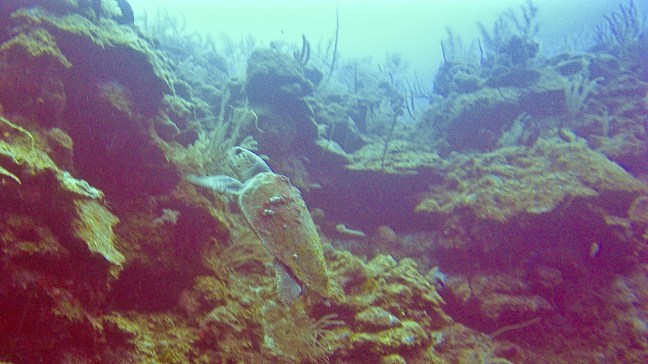
June 15, 2016 was the first time I have ever come upon a Loggerhead sea turtle in the wild. Named for their very large, and thick log-shaped heads, Loggerheads are bigger than the Hawksbill species and are primarily carnivores.   Yum Yum Jellyfish 🙂  Can you see the barnacles on its shell?  This one must be pretty old.  I wonder how long they live?

Here is a link to info. on the Loggerhead sea turtle.

Loggerhead Information

It’s a bird, it’s a plane, it’s a….mazing!

It is always the hope when diving along the edge of a wall (an underwater cliff) where you drop from the “shallow” 100 ft deep protection of the coral reefed underwater mountain top to the darkness of the sea floor (6,000 feet plus) that you will see something BIG.  Like a hammerhead shark (I haven’t seen one… yet) or a manta or eagle ray.  Well along the North Wall of Cayman at a dive site called Hammerhead Hill we were treated to a pair of Eagle Rays swimming by over the deep abyss.  I wish I had a closer view in this VIDEO for you but we respectfully kept our distance.

Here is a link to more information about these graceful “birds” of the sea.

Spotted Eagle Ray Info

Countdown to July 4th, Juno and Jupiter!

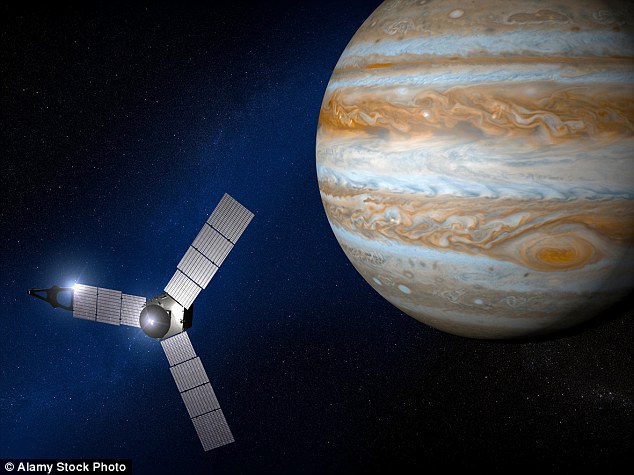
NASA’s revolutionary space probe, Juno, is set to complete its epic five year journey to our solar system’s largest planet, Jupiter.  Juno will get closer to Jupiter than any spacecraft in history and will literally peak through the clouded atmosphere to discover what secrets are hidden below.  Check out the excellent videos links for more details and don’t miss the live NASA feed on July 4th when Juno goes into orbit around Jupiter.   Link to NASA TV

NASA Juno Video on YouTube

Bill Nye!! Video on Juno’s trip to Jupiter

lego-juno-minifigures
NASA has a quirky history of adding something “interesting” to the probes it sends to space.  These special Legos representing the Roman God, Jupiter, his wife, Juno and the astronomer Galileo who discovered the Galilean moons with his telescope are riding aboard Juno!!


What is Under that Ledge??

What was that thing??? It was green and has scary looking teeth.  Full length of this species is about 4 feet if you could see it outside of its hiding place.  These animals are nocturnal though.  I have seen one during a night scuba diving trip.  It was freely swimming in the open all around hunting the reef fish. HUGE! Here is a picture of one that I took two years ago in Cayman when I was diving on the west side off Seven Mile Beach. You can see more of its body.

DIGITAL CAMERA
I was using a digital underwater camera with a flash.  Note all the Red and Orange 🙂

Click Here if you are ready for the answer…

We also saw a spotted species of this animal but could not get a good photo or video.  They are smaller but are really cool looking too.

Good pics of the spotted species.

6/29~ More Baby Snakes Find Homes in LC5!

Zander adopted a really healthy sized (12″long) okeetee patterned baby snake yesterday.   He named it Skittles!  Look how bright the orange coloration is around its head.  I can’t wait to see the colors brighten after the next shed.

IMG_14511
Skittles curled up on a log in his/her new habitat.  Home sweet Home.

And… Nick’s little brother, Noah, adopted a perfectly patterned okeetee baby.  He appropriately named his little snake, Chip.  Chip is living with Nick’s baby amelanistic (red albino) corn snake, Sherbet, in an awesome habitat.

Today I took the remaining three baby corn snakes to Pets-A-Plenty.  They will find good homes for them!  I decided to keep two…. for a little while anyway… Rainbow (albino with tail kink) and Mr. T (an okeetee with a perfect T on his head!).  The third one I am keeping is a beautiful okeetee for Mrs. Mclean in LC4.  She is coming to pick hers up in July.   OH… I forgot to report:  Mrs. McQueen in LC1 adopted a cute little okeetee on Monday that we will be able to visit when school starts!!  Did you miss the opportunity to have a baby corn snake???  Don’t worry… TEN healthy looking eggs are in the incubator 🙂  I wonder if we will have more red albinos?

6/29~”Like totally Dude! Now give me some fin.”

On my top 10 favorite animal list… Sea Turtles!  My featured photo is of a species called the Hawksbill Turtle.  I enjoyed my encounter with this favorite sea friend at Blue Peters Reef in Grand Cayman on June 16th… YUP! on World Sea Turtle Day!!  Serendipitous!

Sea Turtle Day 2016

It let me approach closely I believe because it was very busy eating a shell.  See it in the turtle’s beak shaped mouth?  Odd, because they are omnivores that eat eel grass, sea sponges, sea anemones and squid.  Perhaps this was a female that needed some calcium in her diet to produce her own eggs???  Hypothesis.  Maybe one of you could do some research to figure this out for me.  Check out the VIDEO footage below of “her?” eating.

On a sadder note, like most sea turtles, Hawksbills are on the Endangered Species list; mostly due to being hunted for their beautiful shell… Tortoise Shell… that in some places is still used to make jewelry, hair accessories and decorative boxes.

Here is a video that Taylor took of another Hawksbill that we saw while at a dive site called Rays Bedroom. Taylor was coming back up after finishing our 60 minute dive and doing a decompression safety stop.  Taylor had to stop between 15 and 20 feet for three minutes so he could not move back down towards the turtle.  Luckily the Hawksbill was curious enough to come check Taylor out.  The cool thing though is that Taylor was able to get beautiful footage of the Hawskbill’s shell from above.

In the videos you can really see how much of the color Red is lost.  Please question or comment.  I’d love to hear from you!


6/28~Sea Selfie

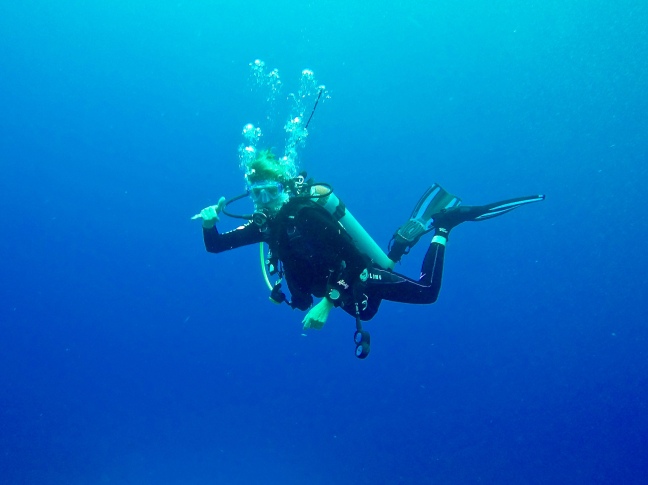
Before sharing sea animal photos (and VIDEOS!!)  I must give credit to my co-photographer, dive buddy and son, Taylor, in the featured photo above.  I was a bit challenged by the GoPro equipment at the start but Taylor was able to get the ball rolling and teach me the ins and outs of the camera.  The GoPro Hero we used was fitted with a red filter to help us compensate for the loss of “ROY”.   “ROY” who???

As you will notice in the photographs and hopefully remember from our light energy lessons in science class… “ROY”, of ROY.G.BIV ,is often absent in our underwater photos. The deeper we were the less sunlight was able to penetrate the water to be reflected to our eyes and the camera lens.  Red is the weakest end of the visible light spectrum and thus the first color to be lost as we descended.  The red filter helped to add some red back in.  A flash on the camera would have been better.  The best photos of sea life I will share are at shallower depths (40-50 feet) where more of the full visible light rays were able to penetrate.

DCIM100GOPROGOPR1449.
We don’t see Red… but many corals would look Red if we used a flash on the camera.  Scuba divers often carry a flashlight so they can see the true colors of all the sea life.

6/27~”Seasing” the Natural World!

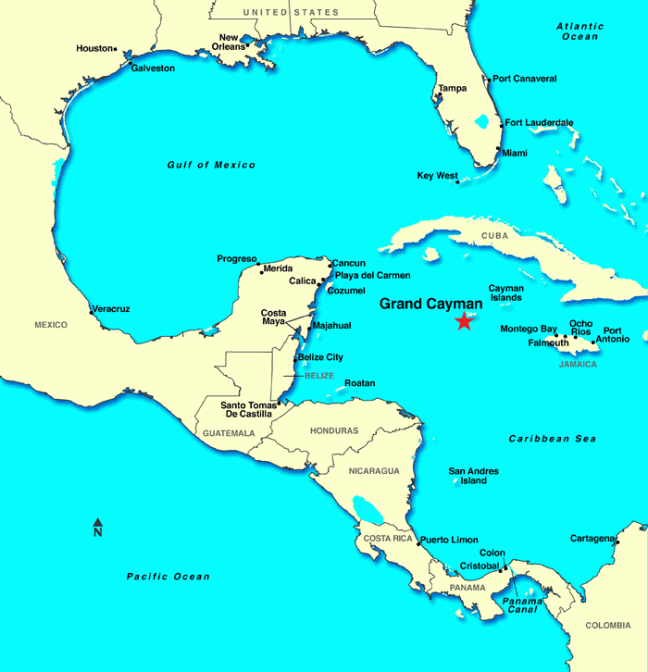
Today I begin a blog series recapping my undersea adventures in Grand Cayman earlier in June. Grand Cayman is the largest of a three island archipelago in the Caribbean Sea.  Just a short 2.5 hour flight from Houston, it is one of the most beautiful places to scuba dive in the world. All of my diving on this trip was on the dramatic North Wall where the Cayman reef drops off to depths of over 3,000 feet. The sea life is diverse and plentiful. What makes this one of my favorite places to dive is that the visibility in the water is always 100 feet +.  That means that even when I am diving 100 feet below the surface I can still see the boat.  That is VERY clear water that provides a crystal view of all the awesome corals, sponges, fish, turtles and more.  Another HUGE plus for me as a recreational diver is that the water temperatures are a balmy 84 degrees Fahrenheit in the summer.  You will see I still wear a 3mm thick full wet suit.

DCIM100GOPROGOPR1331.
Did you know that astronauts train underwater?  I wonder why?

DSC_1489
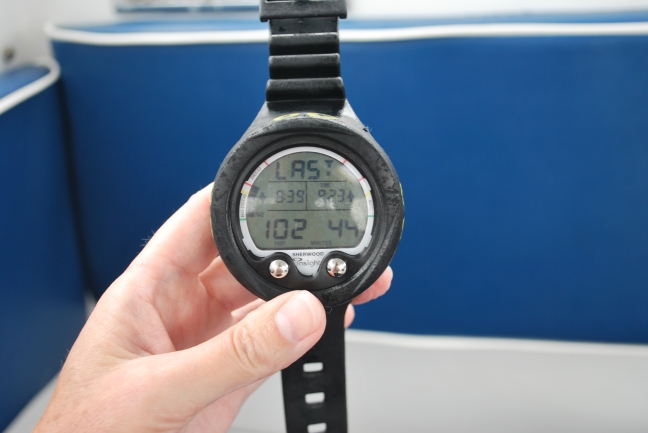
My maximum diving depth was 102 feet.  I was “down” for 44 minutes.
cayman map

A Home for Qbert

Another of Cookie and Brownie’s offspring is happily settled into a new home.  Kayleigh has named this REALLY big and perfectly patterned Okeetee baby… Qbert.  I think he will be the spitting image of Brownie.  Keep us updated Kayleigh on all of Qbert’s milestones!   Quick update on the remaining 9 babies… all but one little stubborn hatchling ate a hearty third mouse meal.  Hoping he eats tomorrow!  Any babies that do not find their forever homes  with LC5 families by Tuesday (6/28) are headed to Pets-A-Plenty.